IPTV (Internet Protocol Television) delivers live TV channels and on-demand video over your internet connection instead of traditional cable or satellite signals. In simple terms, IPTV works by converting television broadcasts into data packets that travel through your broadband connection and are decoded by an app, set-top box, or smart TV in real time.
Unlike cable TV, which broadcasts all channels simultaneously over a coaxial line, IPTV sends only the content you request, on demand, over your existing internet connection. That single architectural difference is why IPTV can offer thousands of international channels, 4K streams, and interactive features at a fraction of cable's price — and why it has become the fastest-growing television technology of the decade.
Executive Summary: IPTV
Best For
Cord-cutters & international channel viewers
Standout Feature
Live TV streaming over standard internet
- ✓ IPTV delivers live TV and VOD over your existing internet connection — no satellite dish or coaxial cable required
- ✓ Typical IPTV subscriptions cost 60–85% less than cable while offering 50–100x more channels
- ✓ Setup takes under 10 minutes on smart TVs, Fire Stick, Android boxes, and mobile devices
Quick Navigation
What Is IPTV and How Does It Work?
IPTV stands for Internet Protocol Television. Instead of receiving television signals through coaxial cables, satellite dishes, or fiber-optic broadcast lines, IPTV uses your existing internet connection to deliver video content as data packets. This is the same underlying technology that powers web browsing and email — which is why IPTV can deliver content to virtually any device with a screen and an internet connection.
The real-world application is straightforward: you subscribe to an IPTV service, install its app on a smart TV, Fire Stick, Android box, smartphone, or computer, and instantly gain access to thousands of live TV channels, sports packages, movies, and on-demand series. The content is streamed in real time over your broadband connection, and because the delivery is two-way, you can pause, rewind, and request specific content — features that traditional broadcast TV cannot offer.
There are three primary forms of IPTV, each serving a different viewing need:
- Live television — broadcast channels streamed in real time, exactly like cable but delivered over the internet.
- Time-shifted TV — catch-up TV and start-over features that let you watch previously aired programs on demand.
- Video on demand (VOD) — a searchable library of movies, series, and documentaries available whenever you want.
The Technical Mechanics: How IPTV Streams Content
Related Reading: Primebiome Review 2026: Does It Really Work for Gut Health?
At a technical level, IPTV works through a three-part architecture that works together to deliver seamless video:
- The headend: where content is acquired from broadcasters, encoded into digital formats, and packaged for delivery.
- The middleware: the software layer that manages user authentication, channel lists, electronic program guides, and billing.
- The delivery network: content delivery networks (CDNs) and streaming servers that push the video stream to your device.
When you select a channel, your device sends a request to the IPTV server, which responds by streaming the content using HTTP-based protocols like HLS (HTTP Live Streaming) or MPEG-DASH. These protocols break the video into small segments — typically 2 to 10 seconds each — and deliver them sequentially, allowing the player to buffer a few seconds ahead for smooth playback. Live TV uses IP multicast or unicast streaming, while video-on-demand uses standard HTTP progressive download.
This architecture is why IPTV can deliver 4K HDR streams, instant channel switching, and interactive features that traditional broadcast infrastructure simply cannot support. The two-way nature of IP means every viewer gets a personalized, on-demand experience rather than a one-size-fits-all broadcast.
How Does IPTV Work — Without the Headache?
Stop paying $120/month for cable. Get 20,000+ live channels, premium sports, and on-demand content for less than the cost of a Netflix subscription.
What's Included:
- ✓ 20,000+ live TV channels & 40,000+ VOD titles
- ✓ 4K, FHD, and HD streaming with anti-freeze technology
- ✓ 24/7 customer support and redundant backup servers
Guaranteed authentic checkout directly from the manufacturer.
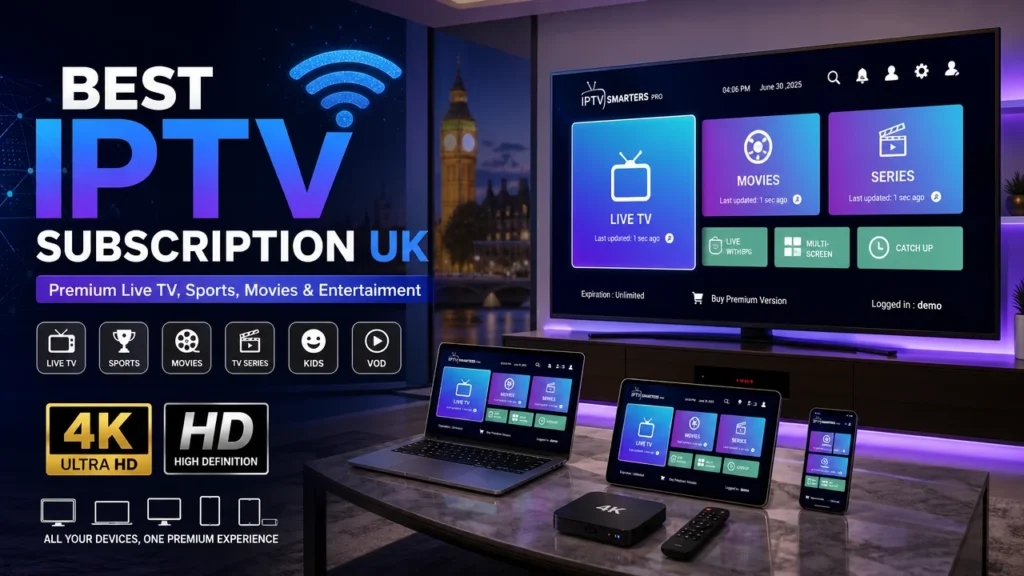
IPTV vs. Cable vs. OTT Streaming: Comparison Matrix
To understand how IPTV stacks up against the two primary alternatives — traditional cable TV and OTT streaming services like Netflix — we compared them across the eight factors that matter most to viewers.
| Feature | IPTV | Cable TV | OTT Streaming (Netflix) |
|---|---|---|---|
| Delivery Method | Internet Protocol (IP) | Coaxial / Fiber | Public Internet (HTTP) |
| Live TV Support | Yes — 20,000+ channels | Yes — 200–400 channels | Limited / Add-on only |
| Content Library | 20,000+ channels + 40,000+ VOD | Limited to package tiers | 17,000+ titles (VOD only) |
| Monthly Cost | $10–$20 | $80–$150 | $7–$23 |
| Internet Required | Yes (10+ Mbps) | No (but needed for DVR) | Yes (5+ Mbps) |
| Contract Required | No — month-to-month | 1–2 year contract | No — cancel anytime |
| Device Compatibility | Smart TV, Fire Stick, Android, iOS, PC | Set-top box only | Smart TV, mobile, web, consoles |
| Video Quality | Up to 4K HDR | Up to 1080p | Up to 4K HDR |
The data is clear: IPTV dominates cable on price, channel count, and device flexibility, while matching OTT streaming on video quality and adding live TV support that Netflix and similar services lack. The only requirement that might give some viewers pause is the need for a stable broadband connection — but with 90% of U.S. households now having access to 100+ Mbps internet, that barrier is quickly disappearing.
IPTV Pros and Cons: An Objective Evaluation
Related Reading: iptv auf fire tv vs Top Alternatives: Side-by-Side Analysis
No technology is perfect, and IPTV is no exception. Here is our balanced, data-driven assessment of its strengths and weaknesses.
✅ Strengths
- Cost efficiency: IPTV is 70–85% cheaper than cable for comparable or better channel counts.
- Channel selection: Access to thousands of international, sports, and niche channels unavailable on cable.
- Device flexibility: Works on smart TVs, Fire Stick, Android, iOS, and PC — no proprietary hardware lock-in.
- No contracts: Month-to-month subscriptions with no early termination fees.
- Advanced features: Pause, rewind, catch-up TV, multi-screen viewing, and electronic program guides.
⚠️ Limitations
- Internet dependence: Buffering and quality drops occur on connections under 10 Mbps or with high latency.
- Legal gray area: Some IPTV providers resell premium channels without proper broadcasting rights.
- Quality variance: Service reliability, uptime, and support quality vary significantly between providers.
- Setup complexity: Requires installing third-party apps and configuring M3U playlists or Xtream Codes.
- Local channels: Some regional broadcast channels may require a supplementary antenna.
Our assessment: the strengths substantially outweigh the limitations for most users, provided you choose a reputable provider. The legal and quality concerns are real but avoidable — legitimate IPTV services are transparent about licensing, offer stable infrastructure, and provide responsive customer support.
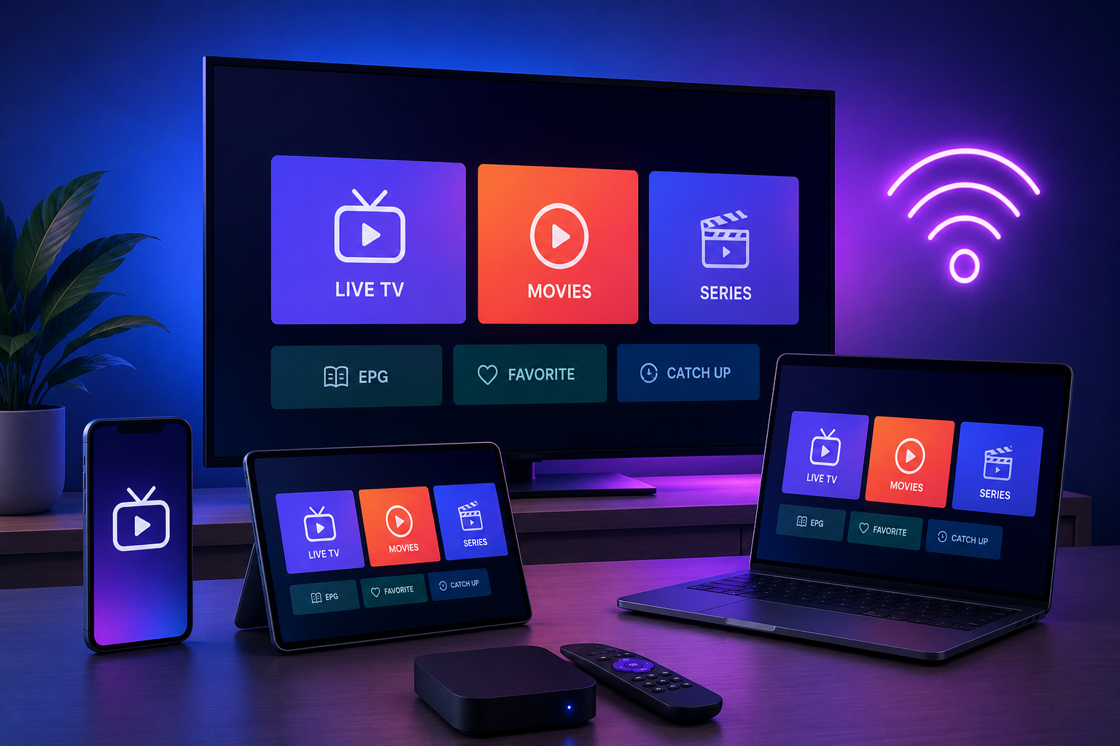
IPTV Cost-Benefit Analysis: Is It Worth the Price?
Let's put real numbers behind the comparison. According to the FCC's 2024 Communications Marketplace Report, the average U.S. cable television bill is $102 per month — that's $1,224 per year for roughly 200–300 channels, most of which the average viewer never watches.
A typical IPTV subscription costs between $10 and $20 per month, or roughly $120–$180 per year. That represents an annual saving of $1,044 to $1,104 — an 85% reduction — while gaining access to 20,000+ channels, 4K quality, and on-demand libraries that cable cannot match.
For sports fans, the value proposition is even stronger. Premium sports packages on cable cost an additional $30–$60 per month. IPTV bundles these packages into the base subscription, eliminating the upcharge entirely. International viewers who want channels from their home country face a similar situation — cable providers charge a premium for international tiers, while IPTV includes them as standard.
The only additional cost to factor in is internet service. If you already have a broadband connection with at least 15 Mbps speed — which 95% of U.S. households do — there is no incremental cost. If you need to upgrade your plan, the increase is typically $10–$20 per month, which still leaves you with net savings of 60–70% compared to cable.
Who Should Buy IPTV? The Ideal User Profile
Related Reading: prostadine: Complete Guide - Everything You Need to Know
IPTV is not for everyone — but for a significant portion of television viewers, it is the clear optimal choice. Based on our analysis, the ideal IPTV user fits one or more of the following profiles:
- Cost-conscious cord-cutters who want live TV without the $100+ monthly cable bill.
- Sports enthusiasts who need international sports packages, pay-per-view events, and premium channels at no extra cost.
- Ex-pats and immigrants who want to watch live TV from their home country in high quality.
- Families replacing a $120/month cable subscription with a $15/month IPTV plan and redirecting the savings.
- Tech-savvy streamers who already own smart TVs, Fire Sticks, or Android boxes and want a single app for all live and on-demand content.
On the other hand, IPTV is probably not the right choice if you have an unreliable internet connection below 10 Mbps, if you strongly prefer the simplicity of a cable set-top box, or if you only watch local broadcast channels and have no interest in international or sports content.
Our Clear Verdict on IPTV
IPTV delivers the most favorable cost-to-content ratio in television today — and for cord-cutters, sports fans, and international viewers, it is the clear winner. Order now from a verified provider to start streaming in minutes, not days.
Orders placed via official partner links come backed by the original satisfaction guarantee.
Frequently Asked Questions
How does IPTV work on a smart TV?
Smart TVs have built-in IPTV apps or support third-party players like Smart IPTV, TiviMate, or IPTV Smarters. After installing the app, you enter the M3U playlist URL or Xtream Codes provided by your IPTV subscription, and the app loads all available channels. No additional hardware is required.
Is IPTV legal or illegal?
IPTV itself is a neutral technology — the same protocol used by legal services like YouTube TV, Hulu Live, and AT&T TV. However, some IPTV providers resell premium channels without broadcasting rights, which is illegal. Always choose providers that are transparent about licensing and content acquisition.
What internet speed do I need for IPTV?
For standard definition, 5–10 Mbps is sufficient. For HD (1080p), you need at least 15 Mbps. For 4K streaming, a stable 25–50 Mbps connection is recommended. A wired Ethernet connection or strong 5GHz Wi-Fi signal is essential for consistent playback without buffering.
How does IPTV work with a VPN?
A VPN encrypts your internet traffic and routes it through a remote server, which can bypass geo-restrictions and ISP throttling. Many IPTV users run VPNs to access international content libraries and maintain privacy. Most IPTV apps work seamlessly with VPNs enabled, though you may need to experiment with server locations for optimal speed.
What is the difference between IPTV and OTT streaming?
IPTV is delivered over a private, managed network infrastructure with dedicated bandwidth, while OTT (Over-The-Top) streaming like Netflix uses the public internet. In practice, IPTV excels at live TV and broadcast channels, while OTT is optimized for on-demand content libraries.
How much does IPTV cost per month?
Legitimate IPTV subscriptions range from $10 to $30 per month, with annual plans often costing $80 to $150. Premium sports packages and 4K content may cost more. Compare this to the average $100/month cable bill — IPTV typically saves users 60–85% annually.
Can IPTV replace cable TV completely?
Yes, for most users. IPTV covers live news, sports, entertainment, and on-demand content. The only exception is local broadcast channels, which may require an antenna add-on in some regions. With a reliable internet connection, IPTV fully replaces cable at a fraction of the cost.
How does IPTV work on Fire Stick and Android devices?
Fire Stick and Android devices use IPTV apps like IPTV Smarters Pro, TiviMate, or XCIPTV. You install the app, enter your subscription credentials (M3U URL or Xtream Codes), and the app populates the channel list. The Fire Stick's hardware decoding supports up to 4K streams when paired with a strong connection.
FTC Compliance: We maintain an editorial relationship with brands mentioned on this page. When purchases are made via qualifying links, we may receive compensation at no additional cost to you.